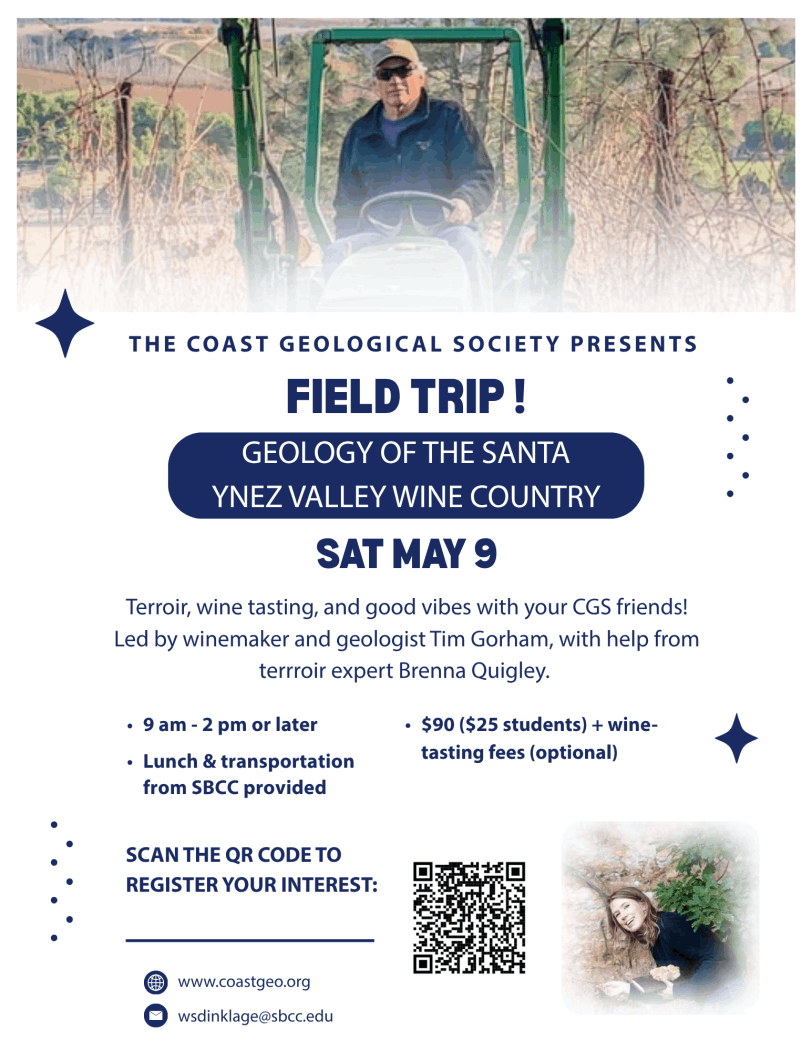
Dr. M. Robinson Cecil Ph.D., CSUN, will be presenting:
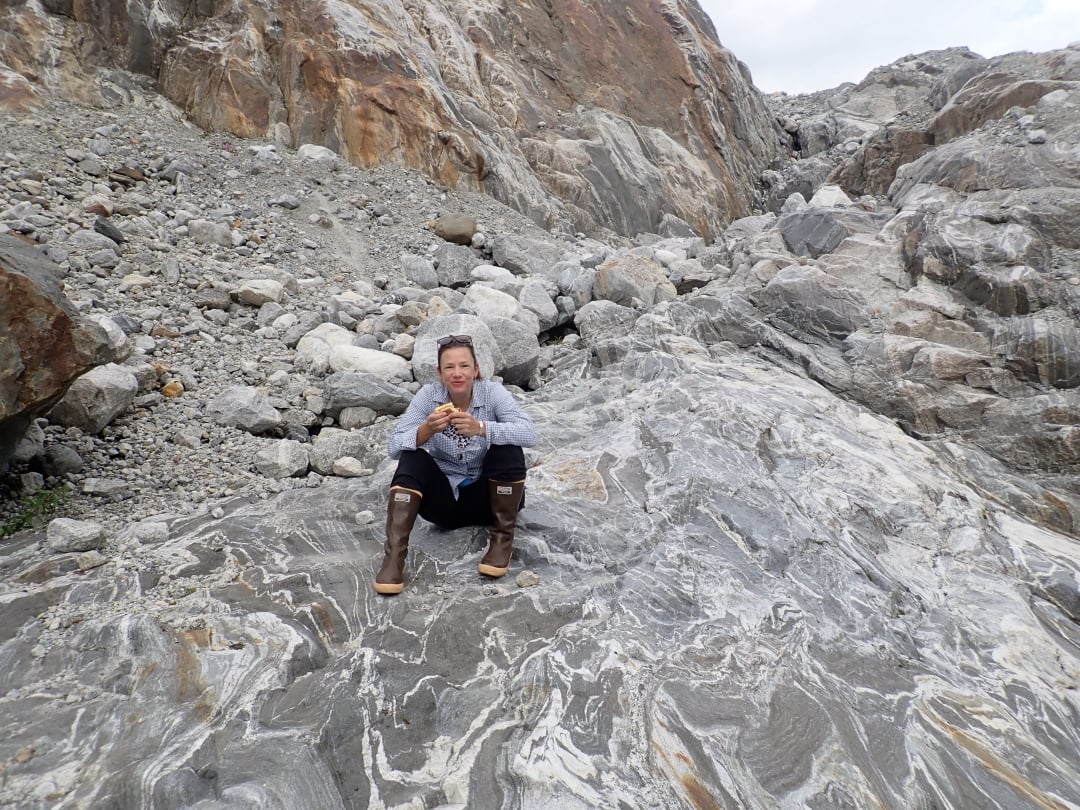

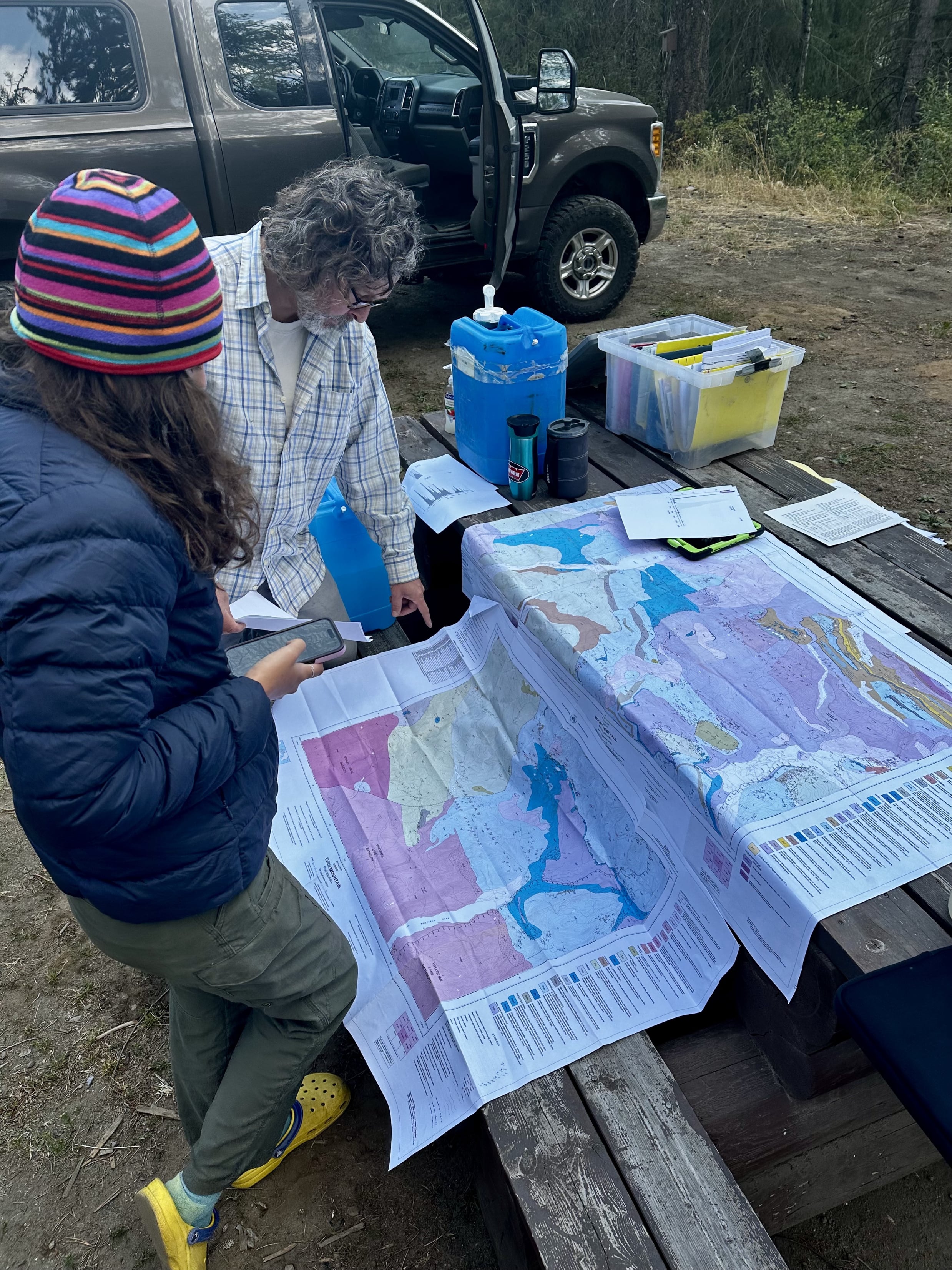
Cordilleran arcs produce large batholiths and are important sites where continental crust is made, modified, and recycled. Because they develop during orogenesis at plate margins, Cordilleran batholiths record important tectonic events and can provide clues to the pre-existing lithospheric architecture. The Sierra Nevada is perhaps the best-studied archetype of a Cordilleran batholith and is commonly held as a basis of understanding and comparison for other Cordilleran arc systems globally. Spatial and temporal trends observed in the Sierra Nevada have led to geodynamic models describing convective removal of dense lower crust and auto-cyclic arc behavior. Such observations and resulting models are largely based on studies of the central and southern segments of the Sierra Nevada, which expose abundant, mostly Cretaceous, granitic rocks, and which have received relatively more attention. In contrast, the northern Sierra Nevada exposes volumetrically less, and dominantly Jurassic, intrusive rocks, and is not as well studied.
A compilation of zircon geochronologic, isotopic, and trace element data from plutonic rocks of the northern Sierra Nevada is used to better constrain the timing and petrogenesis of the northern batholith, and how that might shape our broader understanding of the development of the Sierra. These zircon data shed light on the degree to which the Sierra Nevada – and Cordilleran arcs more generally – modify and recycle continental crust. They are used to probe for paleo-thickness of the arc crustal column and to determine the relative importance of pre-batholithic basement on arc processes. New zircon U-Pb ages from the northern Sierra reveal semi-continuous batholith growth, suggesting that revision to the timing and tempo of batholith development is needed and calling into question the significance of arc episodicity.
New zircon geochemical results indicate magmatism dominated by mantle sourcing but reveal contamination by lithologically heterogenous and variably aged crustal domains. Along-strike differences between the northern and southern segments of the Sierra Nevada suggest that the arc evolved differently along its length, which in turn may have pre-conditioned later tectonic events such as root delamination and renewed uplift.
BACKGROUND
I am a geologist and isotope geochemist who primarily uses field studies, together with U-Pb geochronology and geochemical tools to tackle regional-scale problems in Cordilleran tectonics.
I graduated from Vanderbilt University in 2000, with degrees in Geology and Spanish, spending my entire junior year living in Madrid, Spain. After a brief hiatus waiting tables after graduation, I enrolled in a master’s program at the University of Arizona in Tucson, AZ. I completed my MS in 2004, working on the uplift history of the Sierra Nevada, and decided to continue at UofA in their PhD program. My dissertation continued work on the tectonic history of the Sierra Nevada, while also developing a new K-Ca geochronometer. I graduated in 2009, but again stayed in Tucson to complete a 1-year postdoctoral fellowship with George Gehrels, setting up a new mass spectrometer and developing methods for zircon Lu-Hf isotope analysis. In 2011, I moved to Pasadena and began another 1-year postdoctoral fellowship with Jason Saleeby at Caltech. In 2012, I was hired as an Assistant Professor at California State University, Northridge and have been at CSUN ever since.
RESEARCH INTERESTS
I am interested in the tectonic evolution of convergent margins, which I try to infer via the study of igneous rocks generated in arc settings at those margins. Most of my recent work has been in the Coast Mountains batholith of British Columbia and Alaska (e.g. Cecil et al., 2021), but I have also worked on problems in the southwestern US related to the initiation of subduction (e.g. Cecil et al., 2018), and in the Sierra Nevada, thinking about the magmatic evolution of the arc (e.g. Campbell et al., 2025).
COMMUNITY INVOLVEMENT
I am an active member of my department at CSUN, where I teach Earth Materials and upper division courses in Geochronology and Data Analysis, and where I co-manage a laser ablation mass spectrometry lab. I am also very involved in the Geological Society of America, where I have served as Chair of the Cordilleran section, as Technical Chair of GSA Connects meetings, and as a member of the Annual Program Committee. I am also currently an associate editor at the journals GSA Bulletin and Tectonics.
Works cited (* = student author):
*Campbell, J., Cecil, M.R., Lackey, J.S., 2025, Basement domains recorded in the zircon geochemistry of the northern Sierra Nevada batholith. Geochemistry, Geophysics, Geosystems, v.26. doi: 10.1029/2025GC012443.
Cecil, M.R., Gehrels, G., Rusmore, M.E., Woodsworth, G.J., Stowell, H.H., *Yokelson, I.N., *Homan, E., Kitajima, K., Valley, J.W., 2021, Mantle control on magmatic flare-ups in the southern Coast Mountains batholith, British Columbia. Geosphere, v. 17, p. 2027 – 2041. doi: 10.1130/GES02361.1.
Cecil, M.R., *Ferrer, M., Riggs, N., Marsaglia, K., Kylander-Clark, A., Ducea, M., Stone, P., 2018, Early arc development recorded in Permian – Triassic plutons of the northern Mojave Desert region, California, USA. Geological Society of America Bulletin. doi: 10.1130/B31963.1.